
Best Wood Stoves of 2026, Ranked on EPA Test Data
The best wood stoves of 2026 picked from the EPA certified heater database: tested efficiency, emissions, output and firebox size, with October 2026 prices.
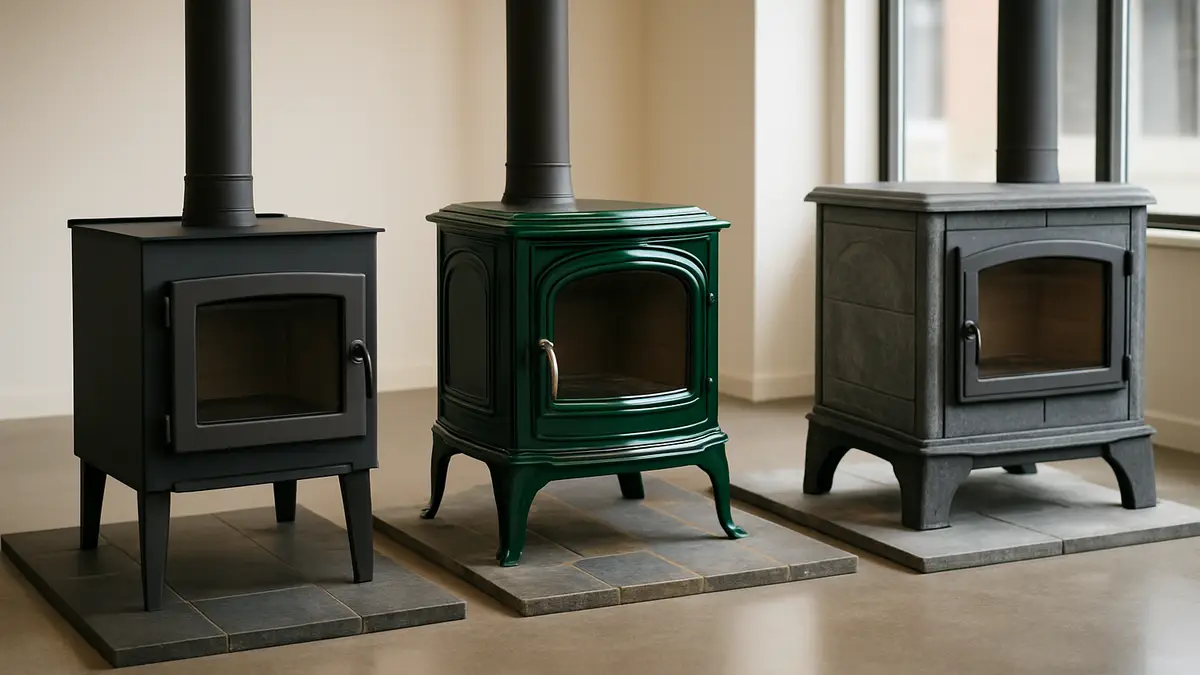
There is no shortage of “best wood stove” lists. Most of them rank on brochure claims like “heats 3,000 sq ft” or “70,000 BTU.” This list ranks on the numbers each stove posted in its EPA certification test, which every new wood stove sold in the US must pass. If you have not sized your stove yet, do that first with the wood stove size calculator; a great stove in the wrong size will disappoint.
Which wood stoves are the best in 2026?
These five stoves lead their categories on EPA-tested efficiency, emissions and output.
| Best for | Stove | Type | Firebox (cu ft) | EPA output (BTU/hr) | Efficiency (HHV) | Emissions | Price (Oct 2026) |
|---|---|---|---|---|---|---|---|
| Overall and long burns | Blaze King Princess PE32 | Catalytic | 2.86 | 11,358-34,435 | 82% | 0.55 g/hr | Dealer quote |
| Soapstone | Woodstock Progress Hybrid 209b | Hybrid | 2.80 | 15,257-35,222 | 80% | 0.46 g/hr | $4,850 |
| Cast iron | Jøtul F 500 V3 Oslo | Hybrid | 2.41 | 14,001-38,804 | 78% | 0.50 g/hr | Dealer quote |
| Large homes | Lopi Liberty NexGen-Hybrid | Catalytic (EPA) | 4.14 | 11,598-47,138 | 80% | 0.90 g/hr | Dealer quote |
| Budget | WoodPro 300 | Non-catalytic | 2.26 | 13,239-36,757 | 74% | 1.60 g/hr | $1,399 |
Specs are each model’s row in the EPA Certified Wood Heater Database, pulled October 6, 2026; all five were tested on crib wood, so their numbers compare directly. “Dealer quote” means the maker publishes no national list price.
How did we choose these wood stoves?
We downloaded all 150 currently certified wood stove rows from the EPA database and started from the numbers: overall efficiency on a higher heating value basis, particulate emissions in grams per hour, tested heat output range and firebox volume. We then read each shortlisted maker’s spec sheet for log length, burn time, flue size and weight, and took prices from the maker’s or brand’s own store in October 2026.
We did not burn these stoves, and no reviewer here has. What we add is the comparison: putting every stove on the same tested basis and flagging where the brochure and the EPA row disagree. The median non-catalytic stove in the database is 71% efficient at 1.7 g/hr; every pick here except the budget stove beats both figures by a wide margin.
Which wood stove is best overall? Blaze King Princess PE32
The Blaze King Princess PE32 is the best wood stove for most people heating a mid-size home, because it pairs top-tier EPA results with the longest controllable burns in its size. Its EPA row shows 82% efficiency, 0.55 g/hr and a tested output of 11,358 to 34,435 BTU/hr from a 2.86 cu ft firebox.
The difference is the thermostat. It needs no electricity and adjusts the air supply automatically to hold a steady output, and Blaze King lists up to 32 hours of run time on low, with an average heating time of 8 to 14 hours per load. It uses a 6 inch flue. Blaze King sells through dealers and publishes no list price, so get quotes from two dealers.
Not for: anyone who wants a big, lively flame at low burn; catalytic stoves run their long burns with a lazy, low fire. The combustor is a wear part you will replace in time.
Which soapstone wood stove is best? Woodstock Progress Hybrid
The Woodstock Progress Hybrid 209b is the best soapstone stove because it combines a catalytic combustor with secondary air and posts the lowest emissions of our picks. Its EPA row lists 80% efficiency, 0.46 g/hr and 15,257 to 35,222 BTU/hr from a 2.8 cu ft firebox.
Woodstock sells factory direct at $4,850 (October 2026), and its site says new orders ship in November or December 2026. The stove takes 22 inch logs, weighs 700 lb and lists a 10 to 14 hour burn time. Woodstock’s own spec page quotes different figures (78.5% HHV, 0.63 g/hr, 13,149 to 47,220 BTU/hr) than the EPA row for model 209b; we use the EPA row so every pick is compared on the same basis.
Not for: anyone who needs quick heat from a cold start, since soapstone takes longer to warm up, or a floor that cannot carry 700 lb without reinforcement. Ask your installer.
Which cast iron wood stove is best? Jøtul F 500 V3 Oslo
The Jøtul F 500 V3 Oslo is the best cast iron wood stove on test data: 78% efficient and 0.50 g/hr from a 2.41 cu ft firebox, a cleaner result than most catalytic stoves in the database. The EPA lists it as a hybrid; Jøtul calls the system Fusion technology with a high-flow combustor that runs without a bypass.
It weighs 445 lb, and Jøtul lists heating capacity up to 2,300 sq ft. Be careful with Jøtul’s 70,000 BTU maximum output figure: the EPA-tested output tops out at 38,804 BTU/hr, which is the number to compare with your heat load. Jøtul sells through dealers, so price depends on your dealer.
Not for: large, drafty homes in cold climates whose design load runs past about 39,000 BTU/hr. Look at the large-home pick below.
Which wood stove is best for a large home? Lopi Liberty NexGen-Hybrid
The Lopi Liberty NexGen-Hybrid is the best pick for a large or cold home because it has the highest tested output of our picks, 11,598 to 47,138 BTU/hr on crib wood, with 80% efficiency and 0.9 g/hr. Its 4.14 cu ft firebox takes 24 inch logs.
Lopi lists up to 18 hours of burn time, a 570 lb weight and heating capacity up to 2,500 sq ft. Lopi also publishes a cordwood output range of 15,000 to 78,200 BTU/hr, which shows how much the test fuel changes the top number; compare the crib wood figure with other crib-tested stoves. The EPA database files the Liberty as catalytic even though Lopi calls it a hybrid. Lopi stoves are dealer-sold.
Not for: tight or small homes. A 4 cu ft firebox in a 1,500 sq ft modern house will be choked down most of the winter, and a choked fire smolders.
Which wood stove is best on a budget? WoodPro 300
The WoodPro 300 is the best budget wood stove because it carries the same EPA certification as stoves that cost $1,200 to $2,000 more. Forge & Flame lists it at $1,399 (October 2026). Its EPA row (2.26 cu ft, 74% efficient, 1.6 g/hr, 13,239 to 36,757 BTU/hr) also covers the Quadra-Fire 4300 Millennium ($2,599), 4300 Step Top ($3,387) and Discovery III ($2,899).
A shared row means the stoves passed testing as one design family; the price gap buys finish, styling, features and the dealer network, not cleaner burning. The WoodPro 300 takes 18 inch logs and lists up to 12 hours of burn time.
Not for: long overnight low burns or the lowest emissions. Non-catalytic stoves like this one burn best at moderate to high output.
Which other wood stoves made our shortlist?
These stoves also post strong EPA rows and suit specific needs:
| Stove | Why it is worth a look | EPA row | Price (Oct 2026) |
|---|---|---|---|
| Blaze King King 40 | Longest burns: up to 40 hours on low; needs an 8 inch flue | 4.55 cu ft, 81%, 1.0 g/hr, 10,392-38,516 | Dealer quote |
| Regency F5200 | Very large catalytic firebox | 4.42 cu ft, 80%, 0.84 g/hr, 13,876-36,398 | Dealer quote |
| Hearthstone Mansfield 8013 | Soapstone hybrid alternative | 2.88 cu ft, 78%, 0.54 g/hr, 14,043-32,200 | Dealer quote |
| Vermont Castings Defiant | Classic cast iron catalytic with a published price | 3.25 cu ft, 78%, 1.3 g/hr, 11,974-25,471 | $4,819 |
| US Stove US2000 | Cheapest certified option we priced | 1.63 cu ft, 70%, 1.6 g/hr, 11,565-34,130 | $1,099.99 |
Prices from Forge & Flame and US Stove’s stores. Note the Defiant’s modest top output, 25,471 BTU/hr, despite its large firebox: catalytic stoves are tuned for long, even burns rather than peak heat.
Why do EPA numbers differ from the brochure?
EPA numbers and brochure numbers differ because they measure different things. Three gaps account for most of it:
- Heating value. The EPA reports overall efficiency on a higher heating value (HHV) basis. Brochures often quote a lower heating value (LHV) figure, which reads about 6 points higher for the same stove (Woodstock lists 84.4% LHV and 78.5% HHV for the Progress).
- Test fuel. Crib wood (milled lumber) and cordwood tests give different output ranges, as Lopi’s two published ranges for the Liberty show.
- Maximum output. “Max BTU” claims often describe a stuffed firebox burned flat out, not a tested operating point.
Compare stoves on the EPA row, and size them on the EPA output range. The wood stove buying guide explains catalytic, non-catalytic and hybrid designs and how to read the label.
Which of these stoves fits your house?
The right stove is the one whose EPA-tested maximum output covers your design heat load without exceeding it by more than about 1.5 times. For a 2,000 sq ft, average-insulated home in a Chicago-like climate (about 48,000 BTU/hr), only the Liberty comes close, with a 47,138 BTU/hr tested maximum. For the same house built tight (about 34,000 BTU/hr) or in an Atlanta-like climate (about 31,000 BTU/hr), the Princess, Progress or F 500 V3 fits. If you want wood to heat every room through ducts or radiators instead, compare wood furnaces and outdoor wood boilers.
Heating under about 1,000 sq ft, a cabin or a workshop? Every stove above is too big; see the small wood stoves guide. Fitting a stove into an existing fireplace? See wood-burning fireplace inserts.
What will it cost beyond the stove?
Plan on more than the stove price. HomeGuide puts professional installation with common chimney work at $3,000 to $8,000 in 2026, with a new chimney costing $3,000 to $20,000 or more. The installation cost breakdown prices each part.
Two smaller costs follow every stove home: firewood dry enough to burn well, below 20% moisture per EPA guidance (see how to season firewood), and, if you want to push warm air farther from the stove, a heat-powered stove fan. Installation itself follows the stove’s manual, NFPA 211, local code and a certified installer.
Sources: EPA Certified Wood Heater Database, EPA Burn Wise: energy efficiency, Blaze King Princess 32, Blaze King King 40, Woodstock Progress Hybrid, Jøtul F 500 V3 Oslo, Lopi Liberty NexGen-Hybrid, Forge & Flame WoodPro 300, Forge & Flame wood stoves, US Stove wood stoves, HomeGuide wood stove installation cost.
Frequently asked questions
Quick answers to what readers ask us most
What is the best wood stove for 2026?
On EPA test data, the Blaze King Princess PE32 is the best all-round pick: 82% efficiency (HHV), 0.55 g/hr emissions and long thermostat-controlled burns. The Woodstock Progress Hybrid is the best soapstone option at 80% and 0.46 g/hr.
What is the most efficient wood stove?
Among the 150 wood stove rows in the EPA database in October 2026, the highest listed efficiency is 83% (HHV), held by Blaze King's 30.2 series (Ashford 30.2 and Sirocco 30.2). The Princess PE32 lists 82%. Anything above 78% is in the top tier.
What is the best cheap wood stove?
The WoodPro 300 at $1,399 (Forge & Flame, October 2026) is our budget pick. It shares its EPA certification row, 74% efficient and 1.6 g/hr, with Quadra-Fire stoves that list for $2,599 to $3,387.
Are catalytic wood stoves better?
In the EPA database, catalytic rows have a median efficiency of 78% and 1.1 g/hr, against 71% and 1.7 g/hr for non-catalytic rows. They burn longer at low output but need combustor replacement and correct bypass damper use.
Does HearthWise test these stoves?
No. We did not burn these stoves. Every number comes from the EPA certification database or the maker's published specifications, and every price is a published list price with its month.